









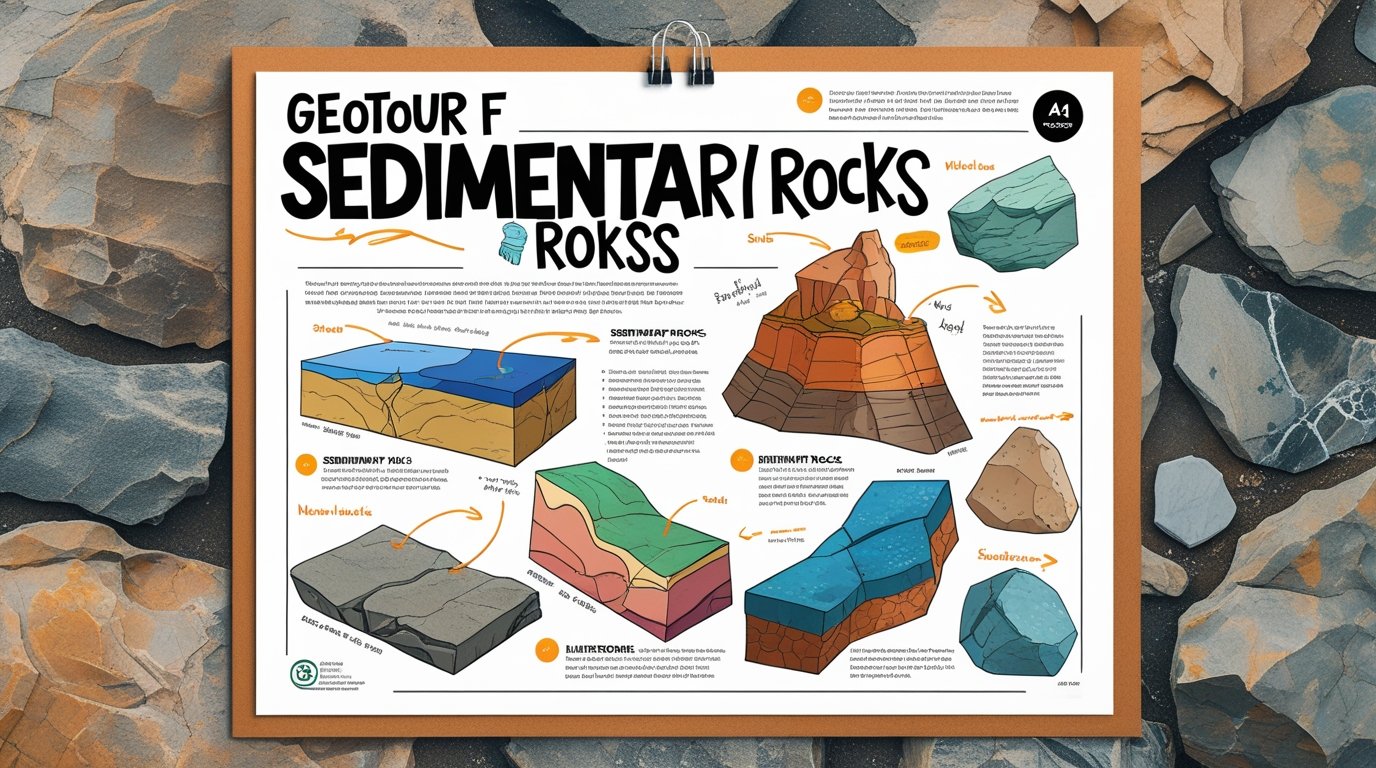
When it comes to studying the formation of Earth and understanding its geological history, Geotour Worksheet F Sedimentary Rocks plays an important role. This educational resource focuses on sedimentary rocks, providing insights into their formation, classification, and the history they represent. By using Geotour Worksheet F Sedimentary Rocks, students, teachers, and geology enthusiasts can deepen their understanding of how these rocks shape the landscape and offer clues about Earth’s past environments. This article will delve into the importance of sedimentary rocks, the structure of the GeoTour Worksheet F, and how this tool can benefit anyone interested in Earth sciences.
What Are Sedimentary Rocks?
Sedimentary rocks are one of the three primary types of rocks found on Earth, along with igneous and metamorphic rocks. These rocks are formed from the accumulation and compression of sediments over millions of years. Sediments, which consist of particles such as minerals, organic matter, and other fragments, are deposited in layers over time. These layers eventually harden and solidify into rocks.
Sedimentary rocks are crucial in the field of geology, as they often contain fossils that provide evidence of ancient life, climate, and environmental conditions. Understanding sedimentary rocks allows geologists to interpret past climates, natural disasters, and the movements of tectonic plates.
Why Is Geotour Worksheet F Sedimentary Rocks Important?
Geotour Worksheet F Sedimentary Rocks serves as a comprehensive guide to understanding sedimentary rocks in the context of Earth’s geological history. Whether you’re a student learning about rock formations, a teacher looking for resources to guide classroom discussions, or a geology enthusiast looking to expand your knowledge, Geotour Worksheet F Sedimentary Rocks offers valuable exercises and educational content.
Learning Objectives of Geotour Worksheet F Sedimentary Rocks
The Geotour Worksheet F Sedimentary Rocks is designed to help students and learners achieve the following:
- Identification of Sedimentary Rocks: Students learn to identify different types of sedimentary rocks by their features, such as grain size, texture, and composition.
- Understanding Rock Formation: The worksheet explains the processes of weathering, erosion, deposition, and lithification, which contribute to the formation of sedimentary rocks.
- Classifying Rocks: It helps learners understand how sedimentary rocks are classified into groups like clastic, chemical, and organic based on their origin and composition.
- Fossils and Sedimentary Rocks: Geotour Worksheet F Sedimentary Rocks emphasizes how fossils are commonly found in these rocks and how they provide insights into past ecosystems and climates.
- Environmental Interpretation: The worksheet teaches how sedimentary rocks can be used to interpret the environment in which they were deposited, such as ancient rivers, deserts, or seas.
By completing Geotour Worksheet F Sedimentary Rocks, students will gain a deeper understanding of how sedimentary rocks are formed and classified, as well as how they are used to uncover Earth’s history.
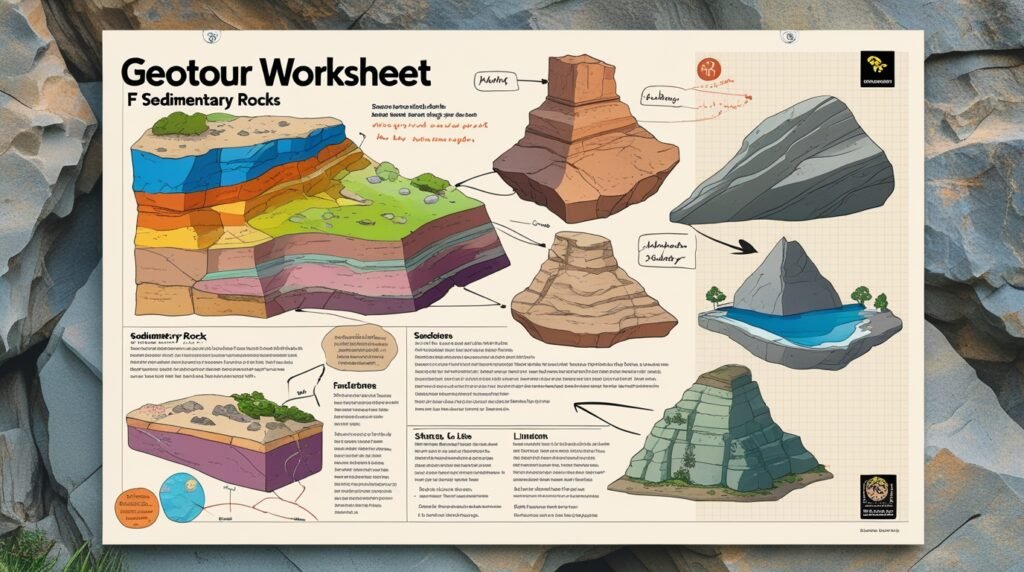
Types of Sedimentary Rocks Covered in Geotour Worksheet F Sedimentary Rocks
The Geotour Worksheet F Sedimentary Rocks focuses on the three main types of sedimentary rocks: clastic, chemical, and organic. Each type has distinct characteristics that help geologists classify them and understand their origins. Below is a detailed overview of each type:
1. Clastic Sedimentary Rocks
Clastic sedimentary rocks are formed from the physical weathering of pre-existing rocks. These rocks are composed of fragments, or clasts, that have been broken down and transported by wind, water, or ice. The clasts are then deposited and compacted to form a solid rock.
- Formation: The formation of clastic rocks typically occurs in environments such as riverbeds, beaches, and deserts.
- Key Features: Clastic sedimentary rocks can be identified by their grain size (coarse, medium, or fine) and the sorting of the particles.
2. Chemical Sedimentary Rocks
Chemical sedimentary rocks form when water evaporates and leaves behind minerals that were dissolved in the water. Over time, these minerals crystallize to form solid rock. These rocks are commonly found in arid environments where evaporation rates are high.
- Examples: Limestone, rock salt, and gypsum are examples of chemical sedimentary rocks.
- Formation: These rocks typically form in places like shallow seas, lakes, and salt flats.
- Key Features: Chemical sedimentary rocks often have a smooth, uniform texture and may contain mineral crystals that formed during evaporation.
3. Organic Sedimentary Rocks
Organic sedimentary rocks are composed of the remains of plants, animals, and other organisms. These rocks form when organic matter accumulates in an environment that lacks oxygen, allowing the material to be preserved and compacted into rock over time.
- Examples: Coal and oil shale are organic sedimentary rocks.
- Formation: These rocks typically form in swampy, low-oxygen environments, such as marshes and bogs, where plant material accumulates over long periods.
- Key Features: Organic rocks often contain abundant fossils and exhibit a darker color due to the organic material.
By exploring these different types of sedimentary rocks in Geotour Worksheet F Sedimentary Rocks, learners will better understand the processes of rock formation and how to identify each rock type based on its composition and texture.
Fossils in Sedimentary Rocks
One of the most fascinating aspects of sedimentary rocks is their ability to preserve fossils. Fossils are the remains or traces of ancient organisms that have been preserved in sedimentary rocks over millions of years. The study of these fossils allows scientists to learn about ancient ecosystems, climates, and the evolution of life on Earth.
Types of Fossils Found in Sedimentary Rocks
The types of fossils found in sedimentary rocks depend on the environment in which the rock formed. Some common fossil types include:
- Body Fossils: These include the actual remains of organisms, such as bones, teeth, shells, and plant material.
- Trace Fossils: These include signs of an organism’s activity, such as footprints, burrows, and nests.
- Microfossils: Tiny fossils, such as pollen, spores, and microscopic organisms, that can provide detailed information about past climates and environments.
By using the Geotour Worksheet F Sedimentary Rocks, students can explore how these fossils are preserved in sedimentary rocks and what they reveal about the Earth’s history. The worksheet encourages learners to identify fossils and consider how they contribute to understanding ancient environments.
Sedimentary Rocks and Environmental Interpretation
Sedimentary rocks offer a window into past environments and climates. By studying the composition, texture, and fossils found within these rocks, geologists can interpret the conditions that existed millions of years ago. The Geotour Worksheet F Sedimentary Rocks helps learners connect sedimentary rock features to environmental factors such as:
- Rivers and Streams: Clastic rocks, such as sandstone, are often associated with river and stream environments, where the energy of the water sorts the particles based on size.
- Marine Environments: Limestone, a chemical sedimentary rock, often forms in shallow marine environments where organisms like corals and shells accumulate.
- Deserts: Wind-blown sand and dust can form sandstones, indicating arid environments.
- Swamps and Bogs: Organic sedimentary rocks like coal are formed from the accumulation of plant material in low-oxygen environments, often found in swamps or bogs.
Understanding how sedimentary rocks form in different environments is crucial for interpreting Earth’s geological history. The Geotour Worksheet F Sedimentary Rocks encourages learners to consider how rock layers, fossil content, and mineral composition reflect ancient climates, ecosystems, and geographical features.
How to Use Geotour Worksheet F Sedimentary Rocks Effectively
To get the most out of Geotour Worksheet F Sedimentary Rocks, it’s essential to approach the material thoughtfully. Here are some steps you can follow to maximize your learning experience:
Step 1: Study the Key Rock Types
Begin by familiarizing yourself with the three main types of sedimentary rocks: clastic, chemical, and organic. Understanding their formation processes and key features will help you recognize them in the worksheet.
Step 2: Analyze Rock Samples
If possible, examine real-life rock samples or high-quality images to identify different types of sedimentary rocks. The GeoTour Worksheet F provides a useful framework for classifying rocks based on texture, composition, and environment of formation.
Step 3: Identify Fossils
One of the most exciting parts of studying sedimentary rocks is identifying fossils. Use the worksheet to guide your identification of fossil types and understand how they provide insights into past life and ecosystems.
Step 4: Interpret Environmental Conditions
As you work through the worksheet, try to interpret the environment in which each rock type formed. Consider how changes in climate, geography, and biological activity may have influenced the deposition of sediments and the formation of sedimentary rocks.
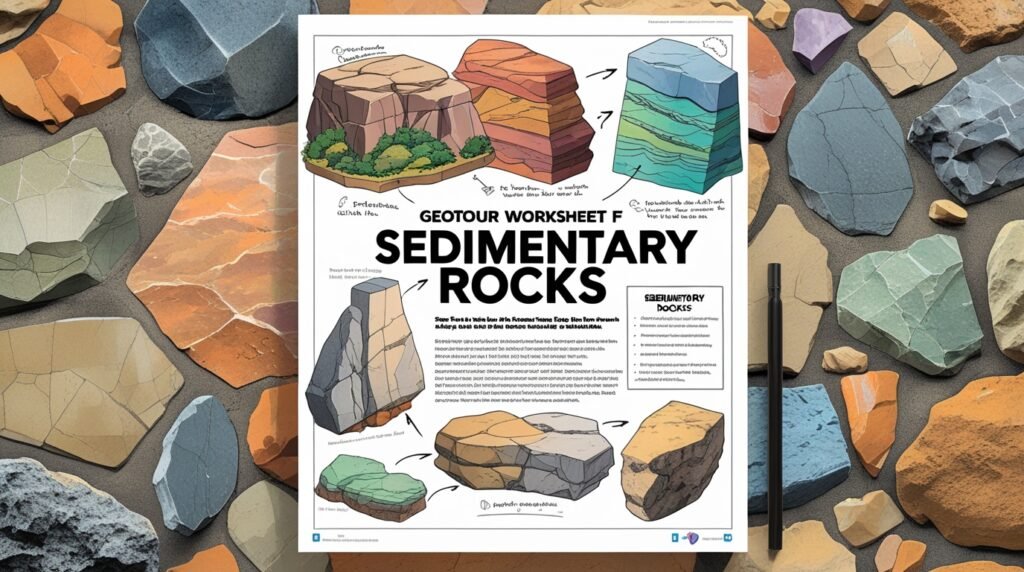
The Importance of Studying Sedimentary Rocks
Studying sedimentary rocks is not just important for geologists but for anyone interested in understanding the history of our planet. These rocks provide clues about:
- Past Climates: Sedimentary rocks hold records of ancient climates, including temperature, precipitation, and even seasonal changes.
- Tectonic Movements: The layering of sedimentary rocks can reveal information about tectonic shifts and geological activity.
- Evolution of Life: Fossils found in sedimentary rocks help scientists track the evolution of life on Earth, providing evidence of the species that lived in different geological periods.
By using Geotour Worksheet F Sedimentary Rocks, you can gain a deeper understanding of how these rocks are formed, classified, and interpreted, giving you the tools to better appreciate the Earth’s dynamic history.
Conclusion: Mastering the Study of Sedimentary Rocks with GeoTour Worksheet F
The Geotour Worksheet F Sedimentary Rocks provides an excellent foundation for learning about one of the most fascinating aspects of geology. By exploring different types of sedimentary rocks, their formation processes, and the fossils they contain, students can gain a deeper appreciation for Earth’s history and the forces that shape our planet. This worksheet is a valuable tool for both beginners and experienced geology enthusiasts, helping them gain hands-on knowledge about sedimentary rocks and their significance in the study of Earth’s past.
FAQs
1. How do fossils help in understanding sedimentary rocks?
Fossils found in sedimentary rocks provide valuable information about ancient life forms, past environments, and climate conditions, helping geologists interpret the history of Earth.
2. Can Geotour Worksheet F Sedimentary Rocks be used for advanced geology studies?
Yes, Geotour Worksheet F Sedimentary Rocks can serve as an introductory guide for beginners and as a reference for more advanced geology students to reinforce their understanding of sedimentary rocks.
3. How does sedimentary rock formation relate to environmental changes?
Sedimentary rocks form in different environments, such as rivers, oceans, deserts, and swamps. By studying their composition and features, geologists can interpret past environmental conditions.
4. Where can I find Geotour Worksheet F Sedimentary Rocks?
Geotour Worksheet F Sedimentary Rocks is available through various educational resources, geological programs, and instructors who use it as part of their curriculum for teaching sedimentary rocks.