





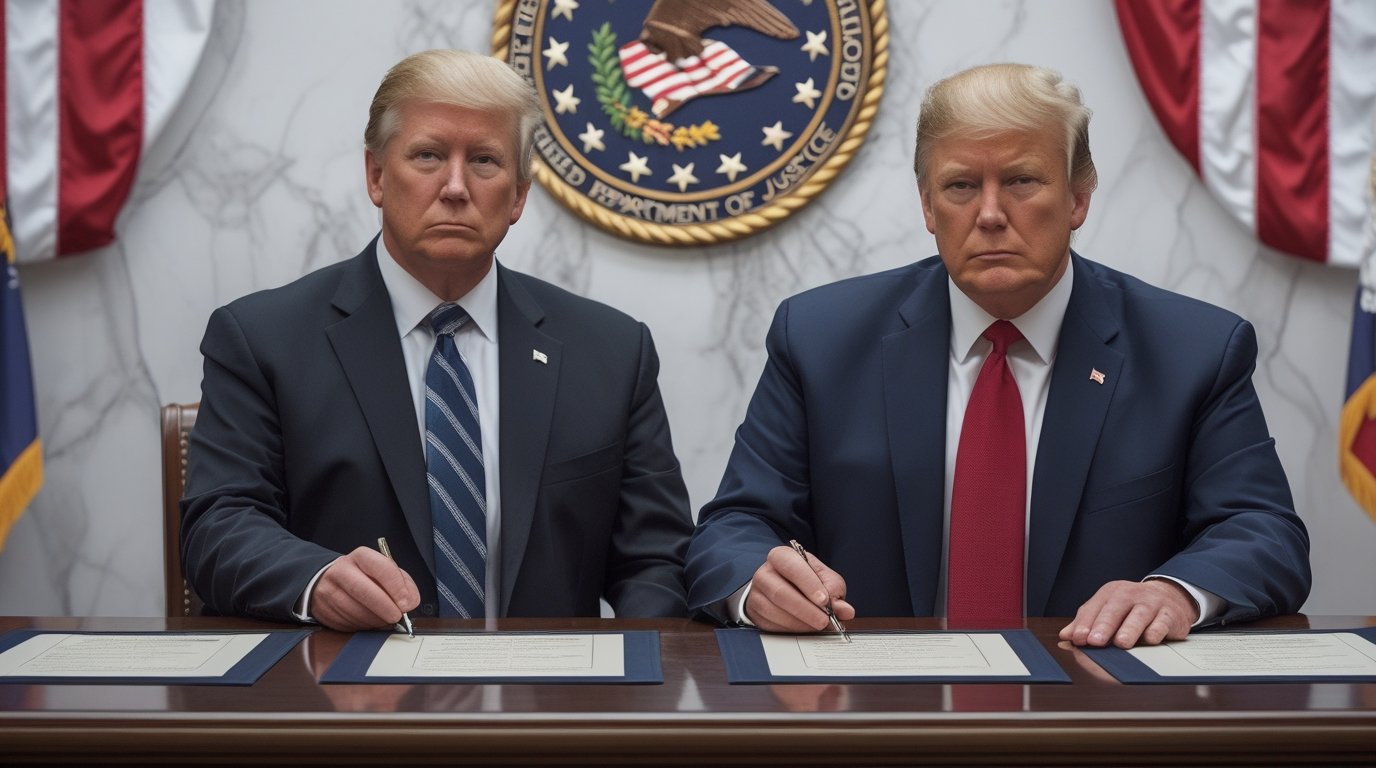
The U.S. Department of Justice recently made headlines when it replaced identical Trump signatures on recent pardons. This surprising move has stirred both curiosity and controversy, as the public has been left wondering why such a step was necessary. To fully understand the reasoning behind this decision and its potential implications, we must dive into the details surrounding presidential pardons, the role of the Justice Department, and what this shift in procedure means for future administrations. In this article, we will examine the background, legal framework, and significance of the Justice Department Replaced Identical Trump Signatures on Recent Pardons, providing an in-depth analysis of the issue.
Understanding Presidential Pardons and the Role of Signatures
To appreciate the gravity of the Justice Department Replaced Identical Trump Signatures on Recent Pardons, it’s essential to first understand the importance of presidential pardons and the role that signatures play in this process. A presidential pardon is a legal act granted by the sitting president of the United States, which absolves an individual from punishment for a federal crime. This power is outlined in Article II, Section 2, of the U.S. Constitution, giving the president broad authority to grant clemency for federal offenses, with some exceptions.
When a president signs a pardon, it signifies the official action to forgive a person for their crime, thereby removing legal consequences such as prison sentences, fines, or other forms of punishment. Signatures are central to this process, as they serve as an official endorsement of the pardon, validating the decision and ensuring that it becomes legally binding.
While the president’s signature typically appears on the official pardon document, the process can involve the Justice Department and other governmental bodies to ensure compliance with legal standards. The decision to Justice Department Replaced Identical Trump Signatures on Recent Pardons raises significant questions about protocol, transparency, and legal compliance in the context of pardons.
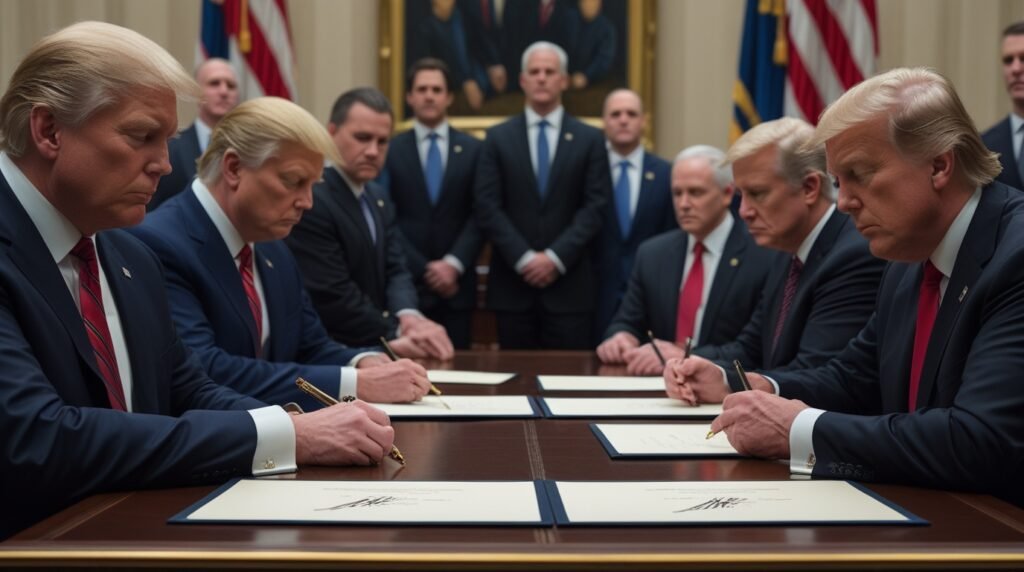
Why the Justice Department Took Action
The decision to Justice Department Replaced Identical Trump Signatures on Recent Pardons sparked widespread attention, particularly due to the unusual nature of the move. At first glance, one might wonder why the Justice Department would feel the need to replace a signature that appeared on official documents. To understand the reasoning behind this decision, we must delve into the specific circumstances surrounding the pardons in question.
Justice Department Replaced Identical Trump Signatures on Recent Pardons: During the final days of Donald Trump’s presidency, he issued a series of pardons to a number of individuals, including political allies, celebrities, and even family members. These pardons generated significant public interest, as many were granted to individuals involved in high-profile legal battles. However, the issue at hand is the uniformity of the signatures that appeared on these pardons.
Reports indicated that several of the pardons bore identical, facsimile-like signatures of the former president, raising concerns about the authenticity and integrity of the process. In response to these concerns, the Justice Department replaced identical Trump signatures on recent pardons, ensuring that the legal process was properly followed.
Legal Concerns Over the Use of Identical Signatures
One of the primary reasons behind the Justice Department Replaced Identical Trump Signatures on Recent Pardons was the potential legal and ethical implications of using identical signatures on official documents. For a presidential pardon to be considered valid, it must adhere to strict legal standards. A facsimile signature, or one that appears to be a copy rather than an original mark, could raise doubts about the authenticity of the document. This could lead to questions regarding the validity of the pardons, potentially undermining the entire process.
Additionally, there are concerns about transparency and public trust in the pardoning process. The use of identical signatures may give the appearance of a lack of oversight or due diligence in handling the pardons. By replacing the facsimile signatures with original ones, the Justice Department replaced identical Trump signatures on recent pardons to ensure that the process met the standards of accountability and authenticity required by law.
How the Justice Department Replaced the Signatures
The replacement of the identical Trump signatures on the recent pardons was carried out through a careful and methodical process. The Justice Department replaced identical Trump signatures on recent pardons by working to ensure that each of the affected pardons was properly reviewed, and that any issues with the signatures were addressed in a way that adhered to legal protocols. While the specifics of the process are not entirely clear, reports suggest that the Justice Department replaced identical Trump signatures on recent pardons with updated, authentic signatures from the president or authorized representatives.
In some cases, the Department may have coordinated with the White House to verify and authenticate the signatures, ensuring that they were consistent with the proper procedures for issuing pardons. By taking this action, the Justice Department replaced identical Trump signatures on recent pardons, aiming to correct any irregularities that might have arisen from the use of identical signatures and to safeguard the integrity of the pardoning process moving forward.
What This Means for Future Pardons
The recent action taken by the Justice Department replaced identical Trump signatures on recent pardons and could have far-reaching implications for how future pardons are handled, particularly when it comes to the role of signatures and the process of issuing clemency. Although the replacement of identical signatures in this case was a relatively minor adjustment, it highlights the importance of maintaining strict protocols in the pardoning process.
Future administrations may adopt stricter controls and transparency measures when it comes to issuing pardons, ensuring that the signature process is both legally sound and free from controversy. The use of facsimile signatures or identical marks could become a thing of the past, as future administrations aim to avoid the scrutiny that arose in this particular case.
Moreover, the Justice Department Replaced Identical Trump Signatures on Recent Pardons serves as a reminder of the importance of oversight and accountability in the legal process. It underscores the role that institutions such as the Justice Department play in maintaining the integrity of government actions, particularly when they involve significant legal decisions like pardons.
The Role of the Justice Department in the Pardoning Process
While the president holds the ultimate authority to grant pardons, the Justice Department plays a critical role in the process. The department provides guidance on the legal and procedural aspects of pardons, ensuring that each case is thoroughly reviewed before a final decision is made. This includes vetting applicants, reviewing their criminal histories, and ensuring that the pardons comply with constitutional and legal standards.
In the case of the recent signature replacement, the Justice Department replaced identical Trump signatures on recent pardons in accordance with its duty to uphold the integrity of the legal system. The department’s involvement in this process reinforces its role as a guardian of the law, ensuring that even the smallest details, such as the authenticity of a signature, are handled with the utmost care.
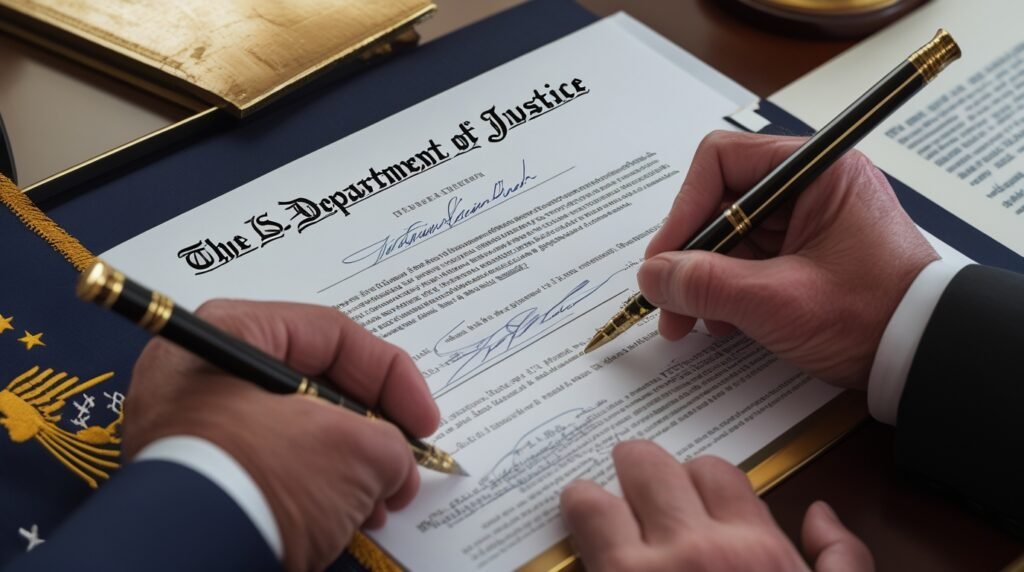
Public Reaction and the Significance of the Change
The decision to replace identical Trump signatures on recent pardons has elicited a range of reactions from the public and legal experts alike. Some view the action as a necessary step to preserve the credibility of the pardoning process, while others argue that it raises questions about the overall transparency and integrity of the previous administration’s actions.
For those who are critical of the Trump administration’s pardoning practices, the Justice Department replacing identical Trump signatures on recent pardons may be seen as an attempt to correct a perceived flaw in the system. However, for those who support the former president, the replacement of the signatures may be viewed as an unnecessary and politically motivated move.
Regardless of one’s perspective on the issue, it is clear that the signature replacement has sparked important conversations about the legitimacy of presidential pardons and the role of the Justice Department in overseeing this process. As future administrations issue pardons, this case may serve as a precedent for ensuring that the process is transparent, legally sound, and free from controversy.
Conclusion: The Impact of the Justice Department’s Actions
The Justice Department replaced identical Trump signatures on recent pardons in a significant development in the realm of presidential clemency. By taking this action, the department aimed to ensure that the pardons were legally valid, transparent, and above reproach. While the change may seem minor to some, it highlights the importance of adhering to established procedures and maintaining public trust in government actions.
As we look ahead to future administrations, the impact of this decision may resonate in the way presidential pardons are issued and scrutinized. The lesson here is clear: the process of granting clemency must be handled with the utmost care, and even small details, such as signatures, should not be overlooked. The Justice Department replaced identical Trump signatures on recent pardons serves as a reminder of the importance of accountability and transparency in the legal system, ensuring that the power to pardon is exercised responsibly and in accordance with the law.
Frequently Asked Questions
Why did the Justice Department replace Trump’s signatures on the pardons?
The Justice Department replaced identical Trump signatures on recent pardons to ensure that the documents were authentic and legally valid. Facsimile signatures raised concerns about the authenticity of the pardons, and the department took steps to rectify the situation by reissuing the pardons with original signatures.
What is the role of the Justice Department in the pardoning process?
The Justice Department provides guidance and oversight in the pardoning process, ensuring that each case meets legal standards and constitutional requirements. The department helps review applicants, assess their criminal history, and ensures that the pardons are issued in accordance with the law.
Could this change affect future pardons?
Yes, the recent Justice Department replacing identical Trump signatures on recent pardons could influence future administrations by encouraging stricter protocols and greater transparency in the pardoning process. Future presidents may avoid using facsimile signatures to prevent controversy and ensure that the process is legally sound.
Was the replacement of the signatures a significant event?
While the replacement of the signatures may seem minor, it highlights the importance of maintaining legal integrity and transparency in the pardoning process. It serves as a reminder of the role that the Justice Department plays in ensuring that the legal system functions properly.
How do presidential pardons work?
Presidential pardons are a power granted to the president under the U.S. The president’s signature on a pardon document signifies the official act of clemency, which absolves the individual from punishment for their offense. The Justice Department replaced identical Trump signatures on recent pardons to ensure that these documents were legally valid and transparent.